

茶王 TEA KING
"The Monarch of Tea From
South West China"


· THE STORY°
At the heart of the ancient tea gardens of Manglu Mountain stands a tree that local tea farmers respectfully call the Tea King of Xigui.
The first thing that surprised me was that it does not look particularly grand.
When people hear the title "Tea King," they often imagine a massive tree towering above everything around it. But the Xigui Tea King is actually not exceptionally tall, and its leaves can be harvested without much difficulty. Its greatness does not come from its size.
Its greatness comes from where it grows and the story it carries.
The Tea King has been rooted in Manglu Mountain for roughly 800 years. Across the river lies the famous Pu'er region. Although the two areas are geographically close, the river separates different geological formations and mineral compositions in the soil. This difference, combined with the unique environment of Manglu Mountain, helped create one of the most respected tea-producing regions in Yunnan.
For a tea tree, the environment is everything.
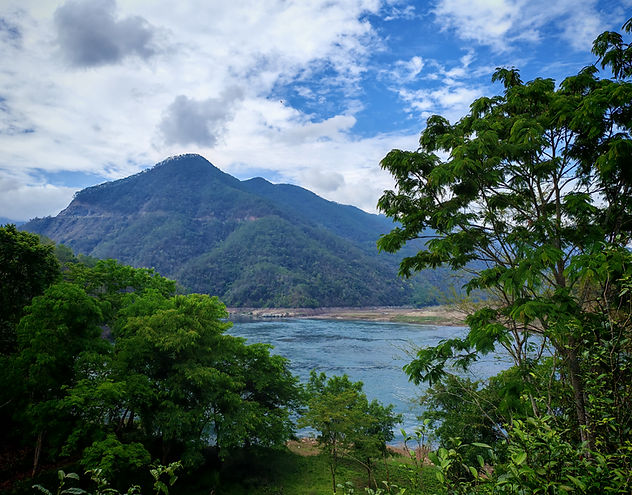
Humidity, temperature, sunlight, and soil all play a tremendous role in shaping the character of the tea. Nestled beside the Lincang River, the Tea King benefits from a unique ecosystem that cannot be replicated elsewhere. It grows naturally among other trees and plants, without fences or artificial landscaping, as part of a living forest.
The tree belongs to the Yunnan large-leaf tea variety, and the leaves are typically harvested as one bud with two or three leaves. Over centuries, it has quietly absorbed the essence of its surroundings, expressing the character of Manglu Mountain through every new spring harvest.
Interestingly, although the Tea King has stood here for centuries, Xigui itself only became widely known in recent years.

In 2012, the Lincang government organized the first Lincang Tea Expo. It was during this event that Xigui tea gained widespread recognition and captured the attention of tea merchants, collectors, and enthusiasts. From that moment onward, the reputation of Xigui continued to rise, and its tea became one of the most sought-after treasures in the tea world.
Yet standing before the Tea King, it is difficult to think about prices or market value.
Instead, what comes to mind is the passage of time.
For eight centuries, this tree has witnessed changing generations, changing markets, and changing tastes. Through it all, it has remained rooted in the same soil, nourished by the same river, and shaped by the same mountain.
Perhaps that is what truly makes it a Tea King.
Not its age alone.
Not its fame.
Not its price.
But it's quiet ability to embody the spirit of a place and carry that story forward, leaf by leaf, year after year.
